

2026
Geonet case study

Case study

×

Table
of
Contents
01
The client, the first tranche and the record
02
The data layer, the dashboard and the tool estate
03
Speed to lead, the AI caller, and the team on camera
04
Two sites rebuilt, measured and live
05
The daily wrap, asking in your own words, the approvals
06
Other operators, the people, how we start


Case study
×
Geonet, July 2026 to now.
A property developer and seller, resort and residential, selling to buyers mainly in Australia through paid campaigns, webinars and a phone team.
DONE
Seven systems connected in one operating layer
CRM history loaded and spot-checked back to July 2022
A 5:30pm wrap to leadership every business day since 11 August
Two websites rebuilt and public since 27 October
IN PROGRESS
Website phase 2 by 31 December
The backend migration, then the handover to their team
Case study
×
The first tranche,
delivered.
Every criterion in the three-phase agreement, demonstrated on screen.
23 of 23
delivery criteria met across the three phases
8
people working on the system where the agreement named four
7
systems connected where five were named
159
dashboard updates since the first acceptance on 24 July
From the delivery record published for Geonet, 28 September 2026.
Case study
×
THE FOUNDER’S OWN COUNT
“I’d list about 10 hires that were on my sheet to do. Mainly in design and business analytics … which I don’t have to do now. Hundreds of thousands of dollars.”
Chad Egan
Founder and Chief Executive Officer, Geonet
Geonet still hires senior specialists. What it stopped doing is adding people as the workload grew.
From his filmed story for the Geonet documentary, published on imperiumos.ai.
Case study
×
Inside Geonet.
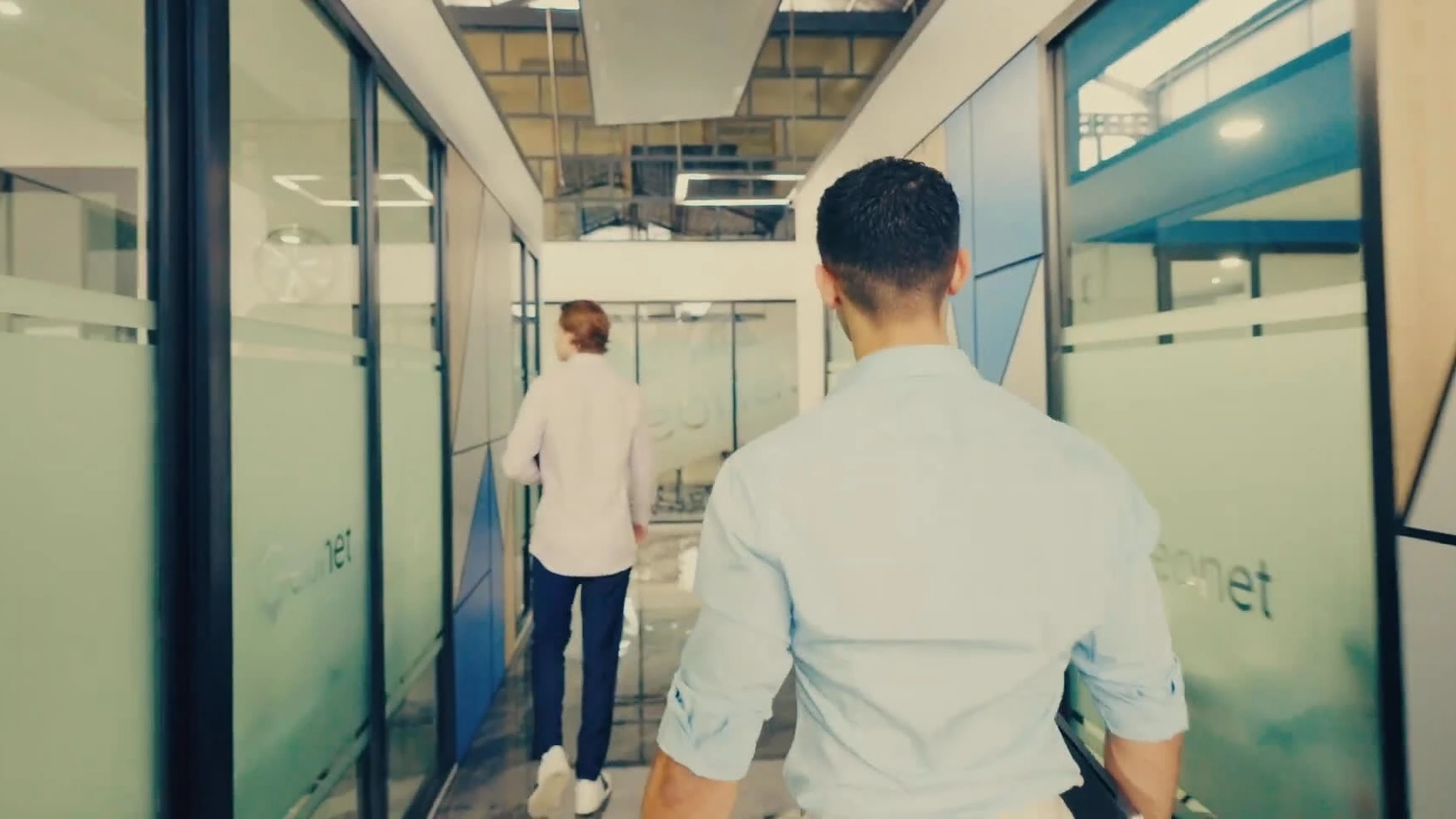
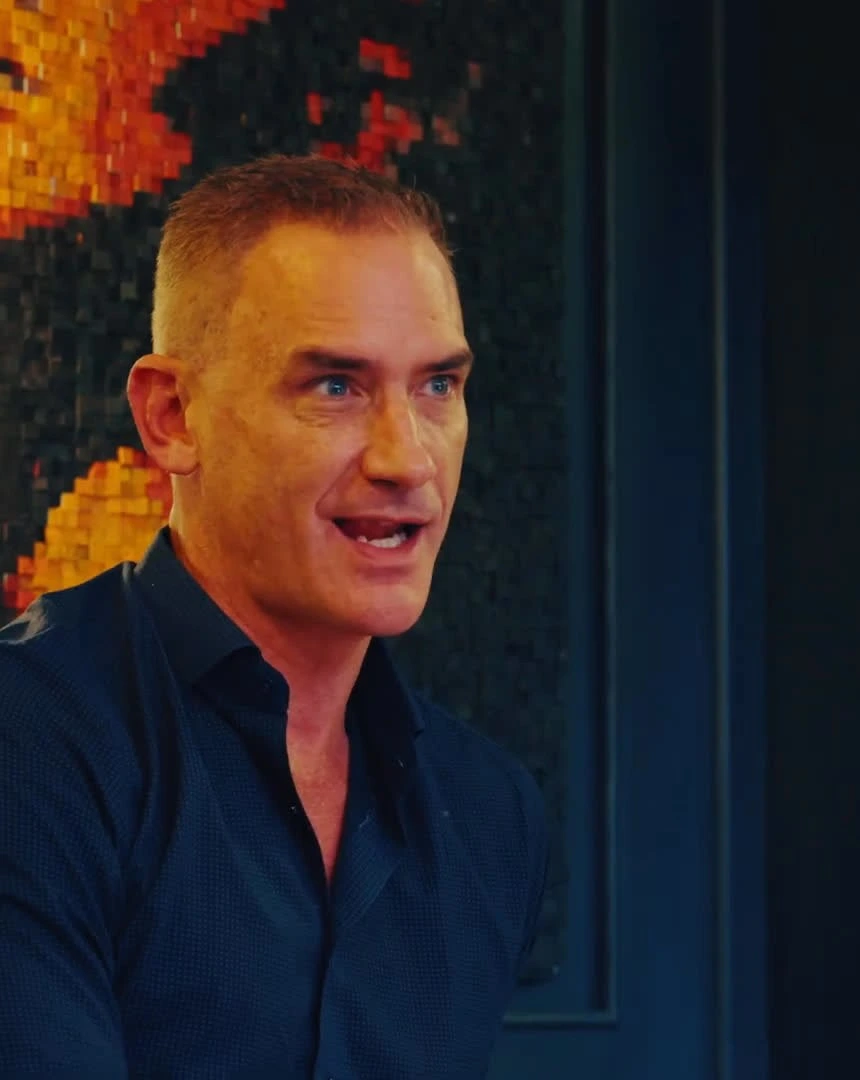
On camera: Chad Egan, Ben Barnes, Elissa Doyle and Archie Nash.
Case study
×
July to now
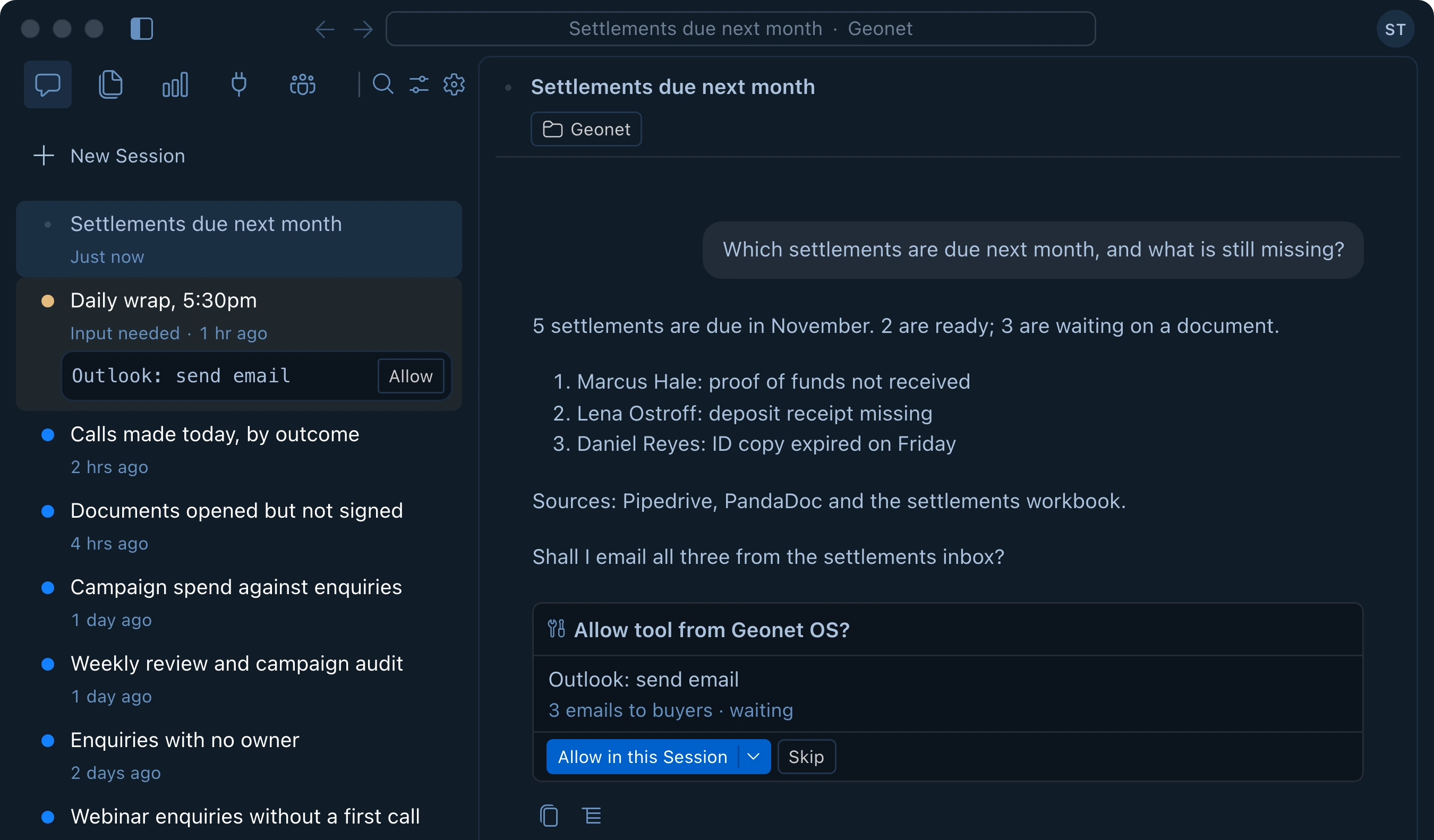
Both websites rebuilt and public on 27 October
Left: Geonet OS in Geonet’s navy. A sample question, invented buyers.
Delivery starts on the 13th
Phase 1 accepted on the 24th, seven criteria on screen
The COO’s weekly tracker goes live
Subscriptions moved into Geonet’s own name
The dashboard review mapped against the code
The 5:30pm wrap starts
Call intelligence is rebuilt
The three-month record published
The code and hosting audited
The whole tool estate counted
The target architecture written
Phase 3 accepted, 23 of 23. More first calls made inside the hour
Website phase 2
Backend migration
Handover to Geonet
Backend migration
Handover to Geonet
July
August
September
October
NOW
Next
Dated from the delivery files and the published record. No payment dates.

Case study
×
Four years of sales
history, in one place.
Their CRM and phone systems, read and cross-checked against the team’s own counts.
20,592
deals, plus 3,999 calls, read on 14 July
5,000+
calls reviewed by the call-intelligence layer by early August
7,524
calls in a month against the team’s own count of 7,266, the gap explained
15
reporting questions mapped to a view in the target design, 3 of them impossible on the old stack
Counts from the ingest records and the dashboard review, July to October 2026.
Case study
×
One dashboard, on
Geonet’s numbers.
Leads, calls, campaigns and settlements in one picture, read by their own team.
WHAT IT MEASURES
Which leads arrived, and when each was first called
Every call the layer reviewed, by person and by outcome
Which campaigns earned their spend
Which contracts are moving, and which are going cold
Who is accountable for the next step
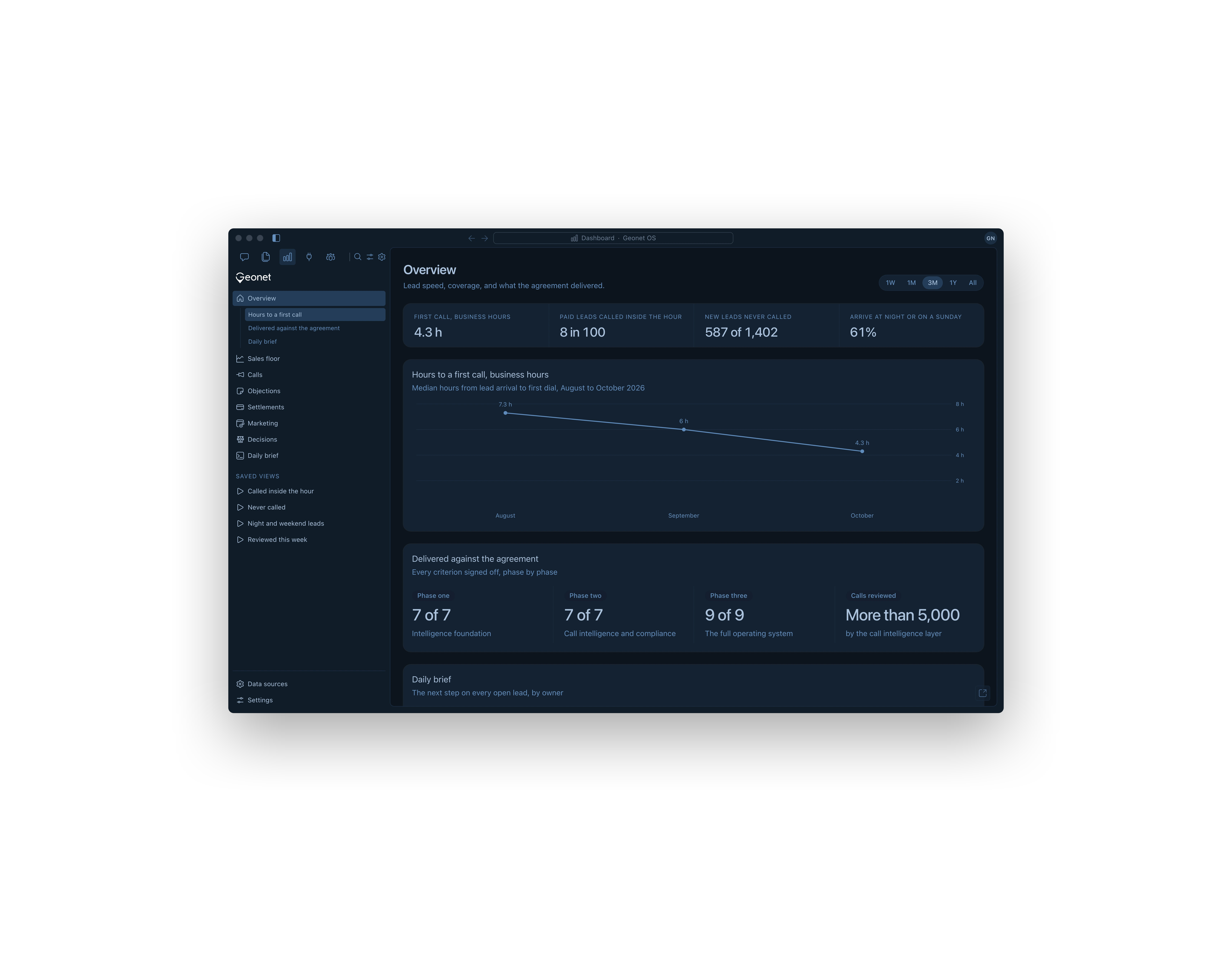
Every lead gets a first call and an owner, and the 5:30pm wrap names the ones that slipped.
The dashboard view built for their team, shown with their figures.
Case study
×
The estate, counted.
A read-only audit of everything that runs behind the business, then one place for each of them.
42 → 1
code repositories
86 → 1
hosting projects
6 → 1
databases
6 → 1
payment providers, going to Stripe (bank transfer stays)
BEHIND THOSE COUNTS
630 routes, 45 domains, 13 scheduled jobs.
Counted on 3 October 2026. The point was visibility: one place to see everything that runs.
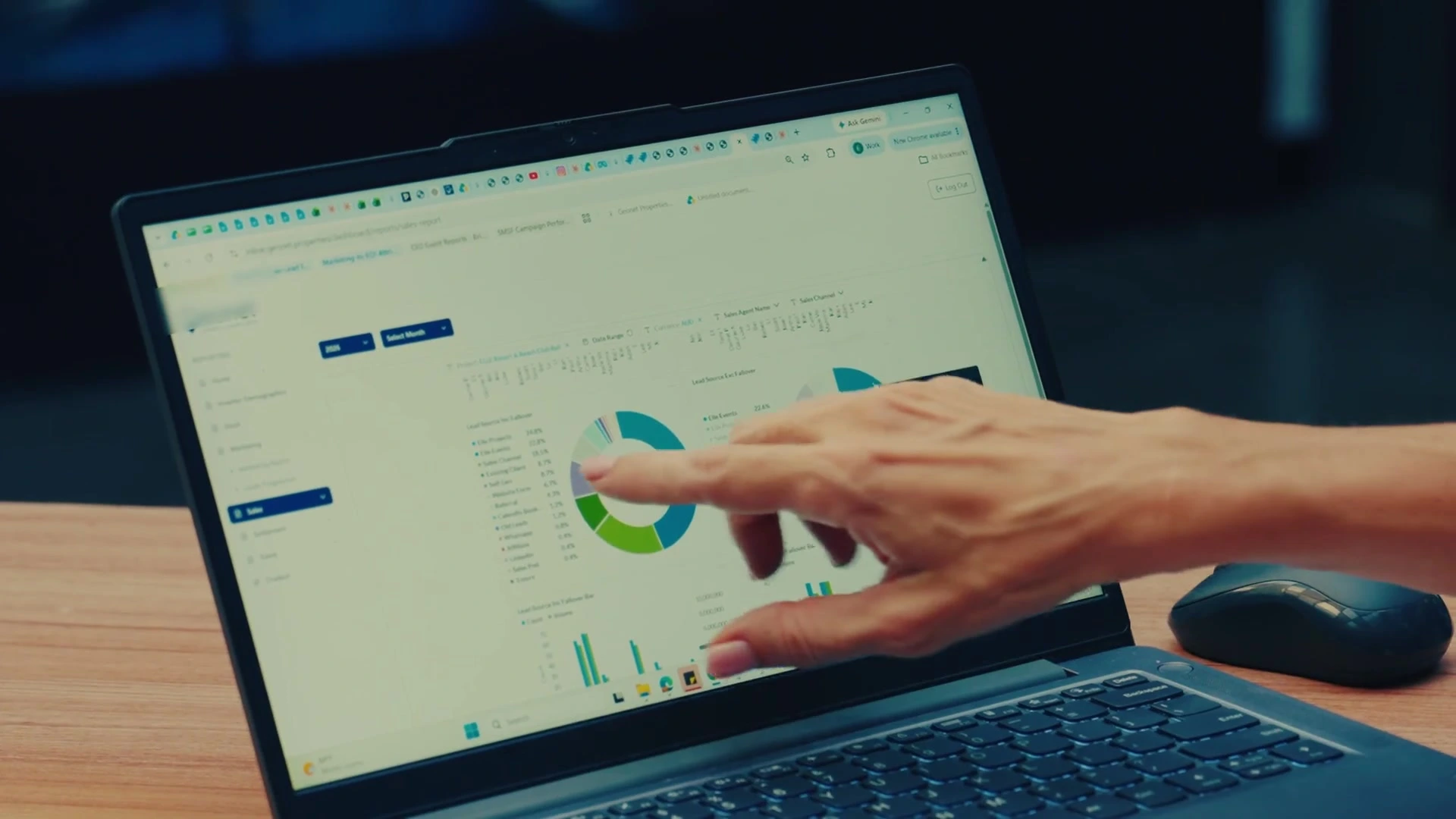
Read-only audit of their code organisation, hosting and databases, 30 September to 3 October 2026.
Case study
×
Thirty-two outside
services, fifteen kept.
32
15
Ten switched off, seven under review.
Counted by name and by what each one is for, so a renewal is a decision instead of a surprise.
Services named in the 3 October 2026 estate audit. Every mark is recorded with its source in the deck’s logo ledger.
15
KEPT


Stripe

Xero
PandaDoc

Brevo


Calendly

Meta Ads

Google Ads

LinkedIn Ads

Google Analytics

Tag Manager

Sentry

Turnstile
Microsoft Entra
7
UNDER REVIEW

ElevenLabs


fixer.io


Google Vision


OpenRouter
10
SWITCHED OFF


PayPal

Square
NAB PayWay




reCAPTCHA
Crazy Egg

Vercel Analytics

Case study
×
Speed to lead.
Every paid lead is timed from the moment it arrives to the moment someone calls it.
1 → 8
in 100 paid leads called inside the hour, their own read on 13 October
7.3 h → 4.3 h
to the first call in business hours, August to October
587
of 1,402 new leads never called at all, July to September
61% of new leads arrive at night or on a Sunday, the hours Australian rules keep sales calls closed.
From the 13 October operating-system review and the 20 October strategy session.
Case study
×
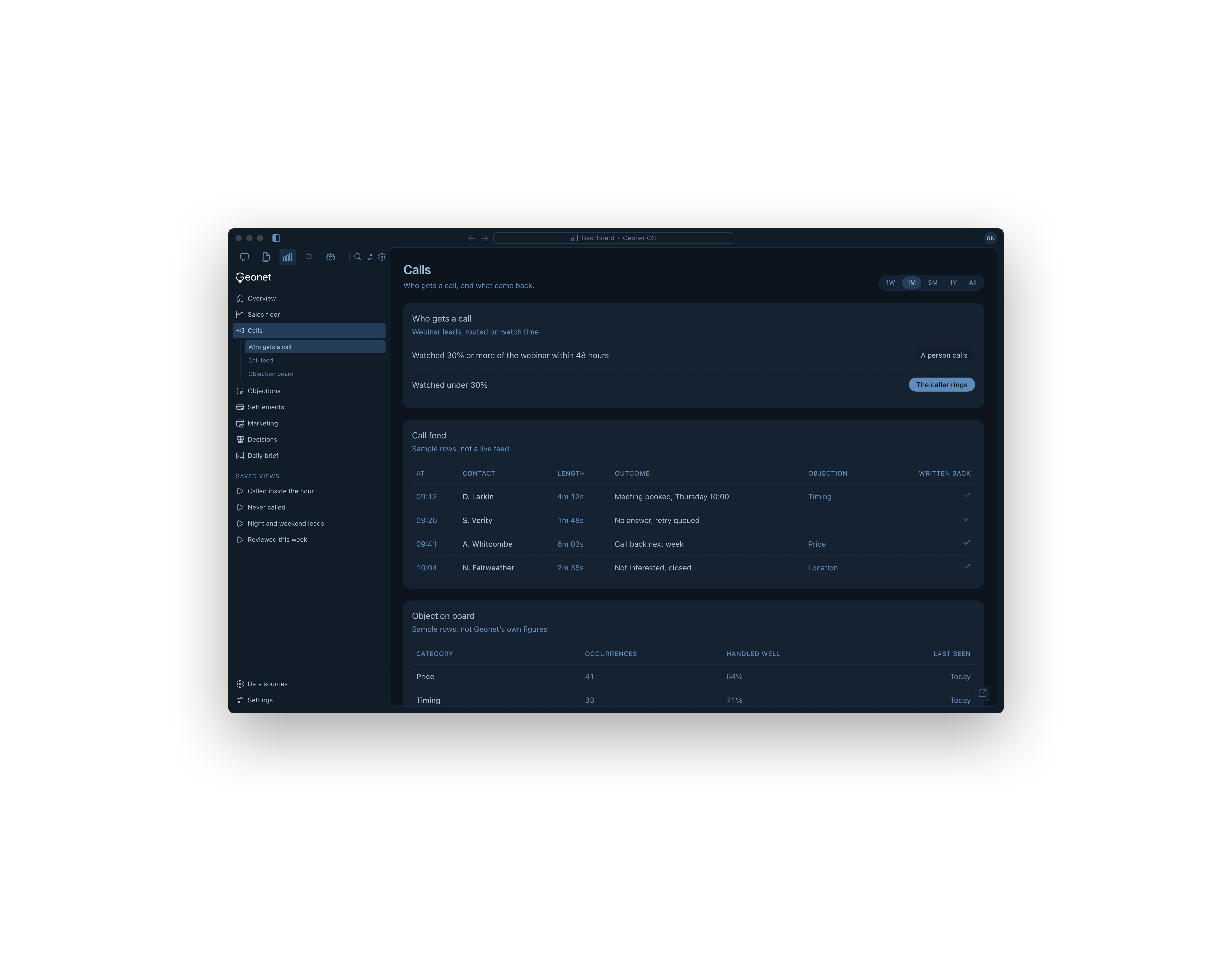
A person calls the keen webinar leads.
The AI caller rings the rest.
Geonet’s own team built the caller. It runs inside the operating layer Imperium installed, and the OS decides who it rings and logs what comes back.
About 1 in 10
calls placed books a meeting, on their team’s figure
Under US$0.01
a call
2
sales closed so far through calls it booked
Every call is written back to the record the OS already holds.
Case study
×
A week of marketing reporting,
back in fifteen minutes.
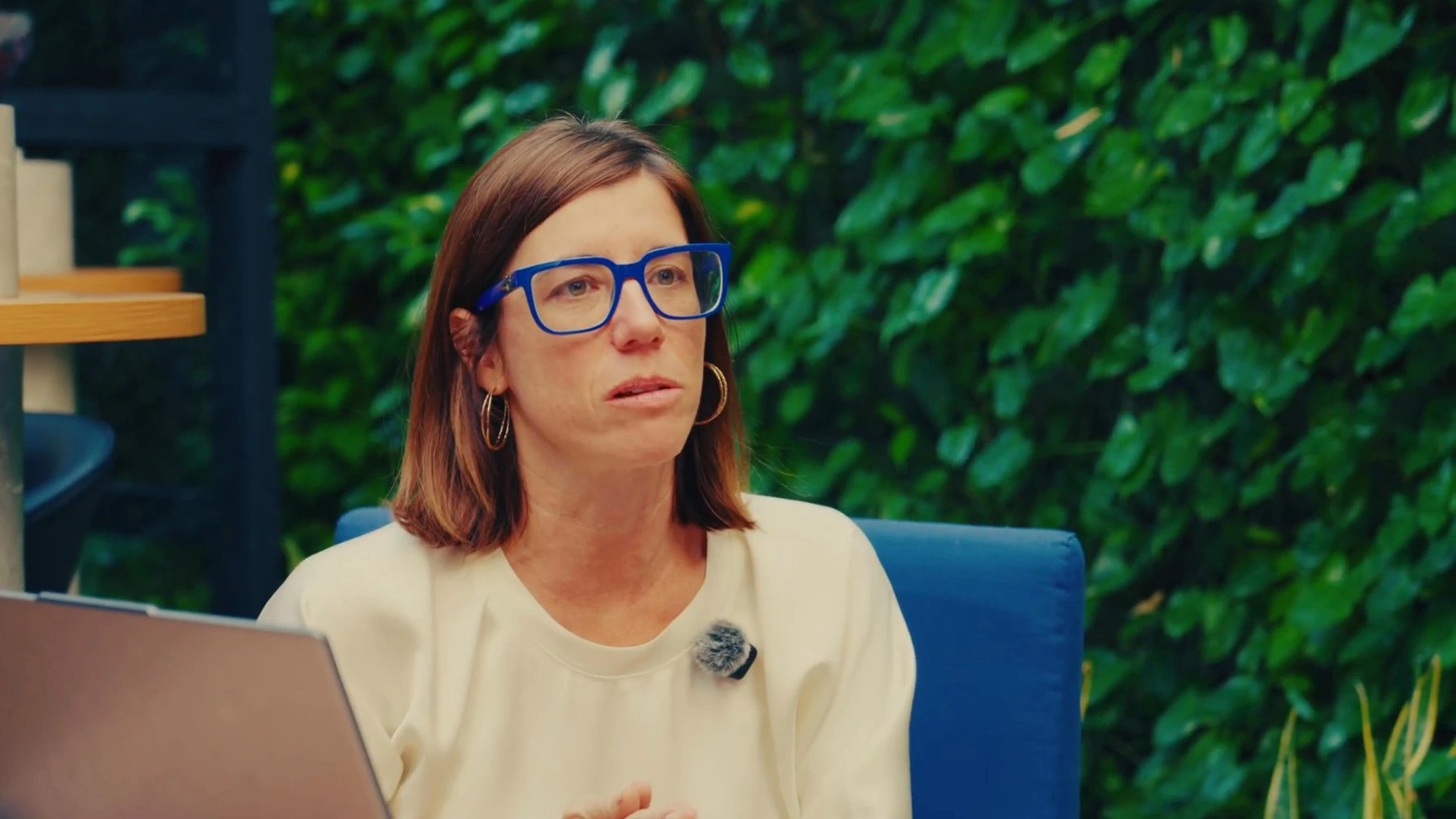
IN HER WORDS
15 min
for a week of marketing funnel reporting
30 min
for a campaign audit and twenty-five concepts that used to take two weeks
About 40
touchpoints watched, first ad to settlement
Elissa Doyle, Chief Marketing Officer, Geonet
Her figures, from her filmed story, published on imperiumos.ai.
Case study
×
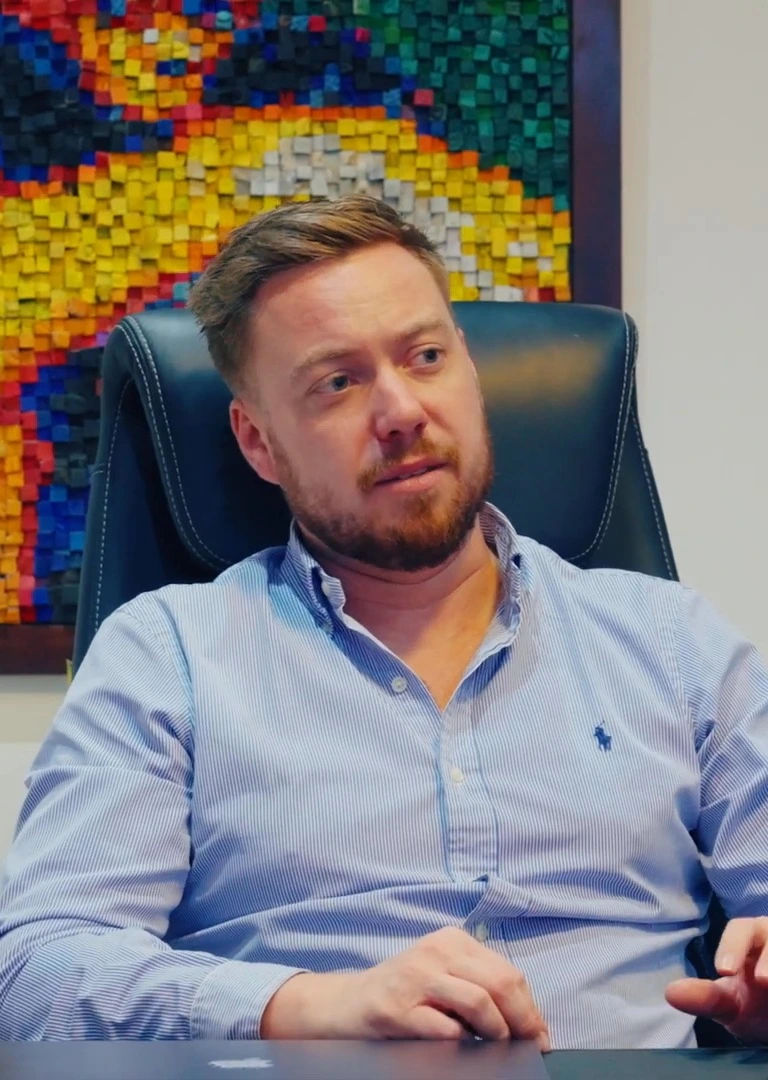
COO, GEONET
4 weeks → 4 days
the broker-platform launch plan, in his words
“It was like Jarvis out of Iron Man. Being able to talk to a system that can do a multitude of things for me at the same time.”
Ben Barnes, Chief Operating Officer, Geonet
He started the same week the operating layer went in, and the launch was his first deliverable.
Case study
×
Ben, in his own words.
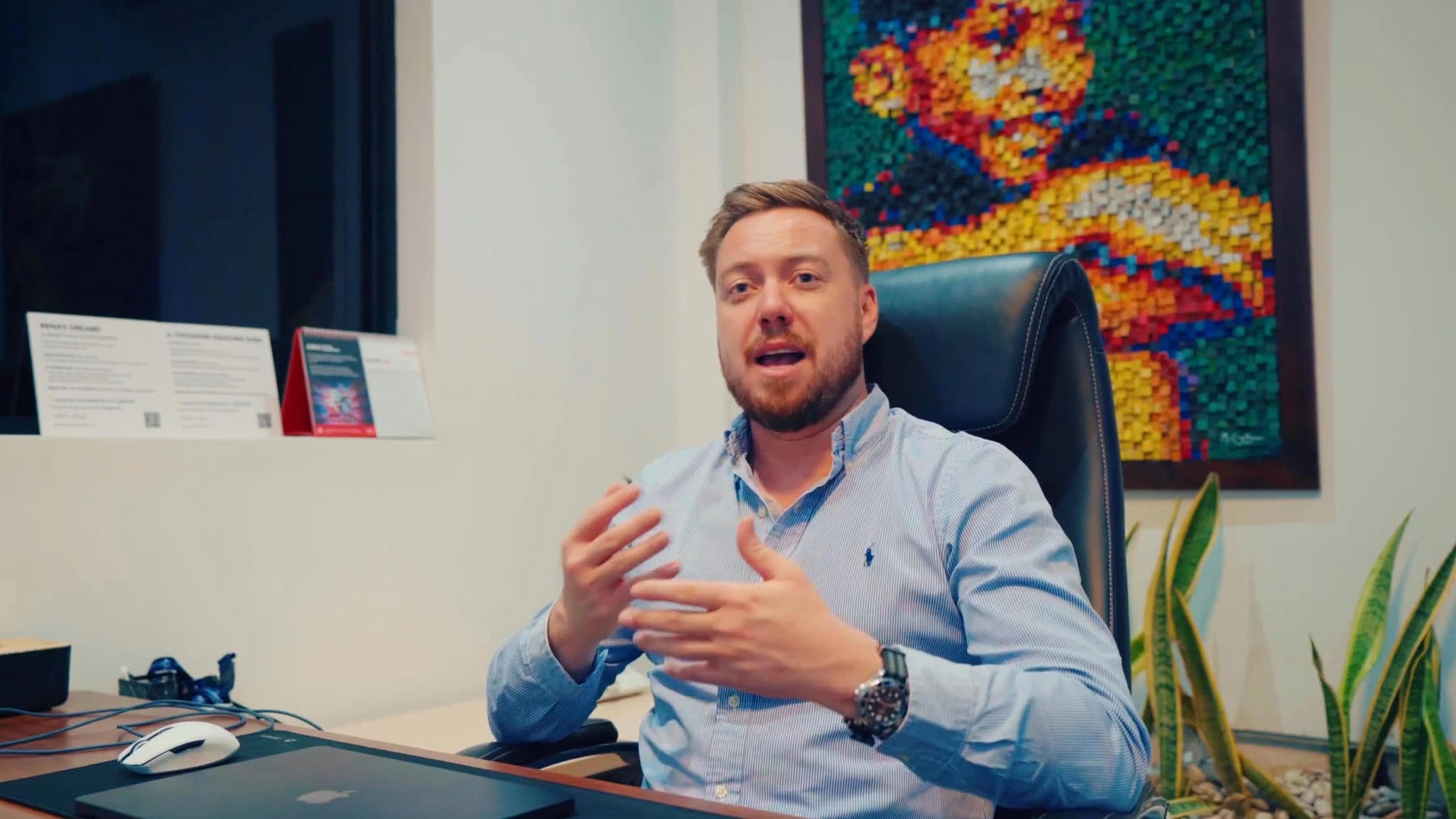
IN THE FILM
3:41
Onboarding, the knowledge base, and bringing a team to one standard
5:21
“Some days it felt like I had a team of ten working for me”
6:40
“We certainly don’t need to take on 50 marketing specialists … or another 40 people in settlements”
7:22
Why marketing, settlements and tech each need a different answer
Ben Barnes, Chief Operating Officer, Geonet
Case study
×
Two websites, rebuilt and live.
GEONET.PROPERTY
96
mobile PageSpeed on the new home page
3.63 → 2.39 MB
home page weight after the same pass
THE WYLDER

74 → 87
mobile Lighthouse score, with largest paint 5.8 s → 3.5 s
3.21 → 1.94 MB
page weight on the standalone site
Every visit, film watched and form sent lands in one data store, with the campaign that brought the visitor.
Geonet home: one Google PageSpeed run on 27 October. The second site: Lighthouse mobile, median of three local runs on one machine; Google PageSpeed reads 86 after the pass. Both sites public since 27 October 2026.
Case study
×
What runs every day.
EVERY BUSINESS DAY
A 5:30pm wrap to leadership, since 11 August
EVERY WEEK
Performance reviews and a campaign audit
EVERY MONTH
A written report and a settlements forecast
BEYOND THE AGREEMENT
Campaign Command with per-campaign profit and loss, a campaign board with creative previews, and a follow-up drafter.
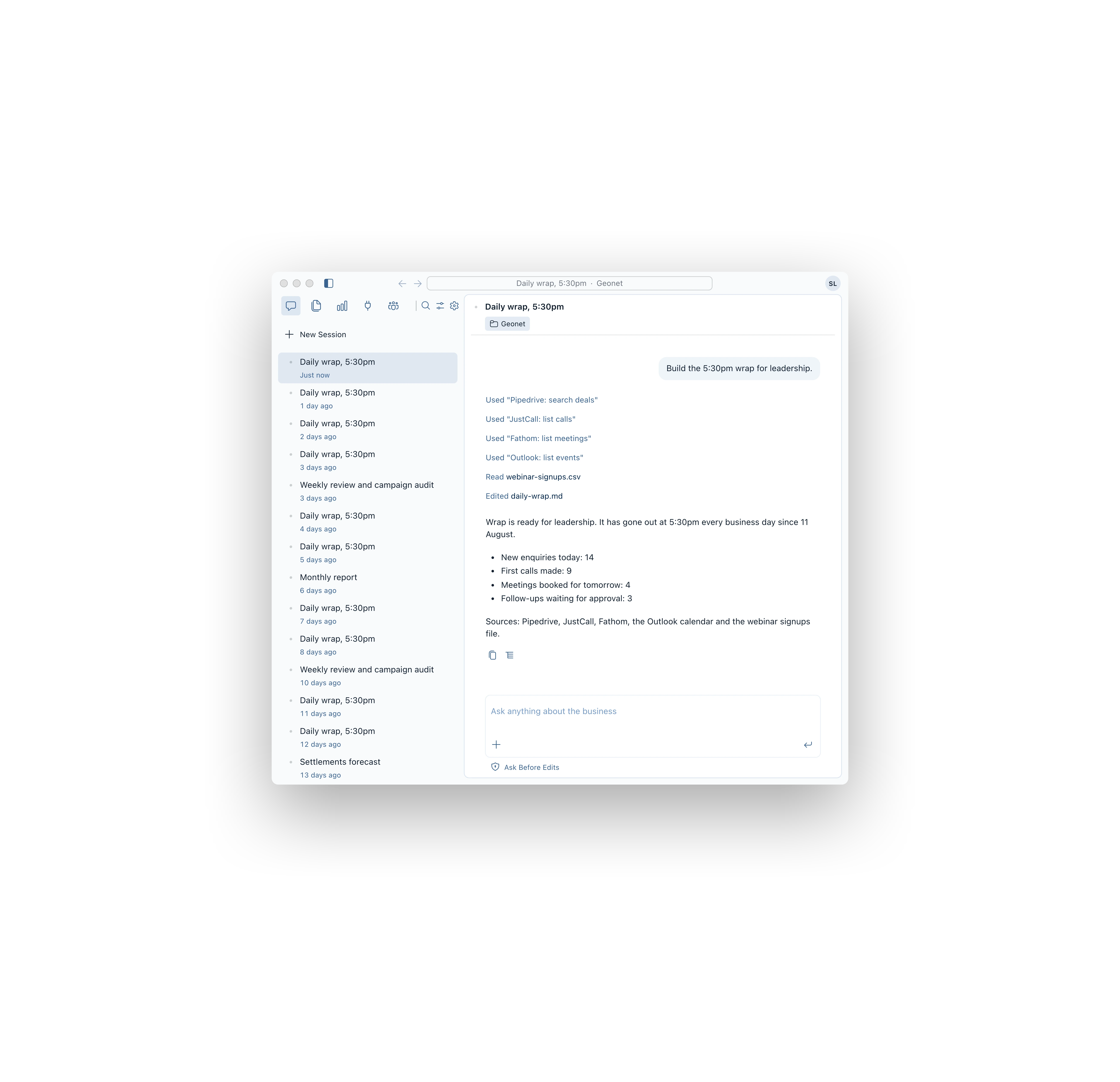
The 5:30pm wrap as it lands in Geonet OS. Illustrative screen. Sample data, not Geonet’s own figures.
Case study
×
Ask in your
own words.
It answers from
Geonet’s own data.
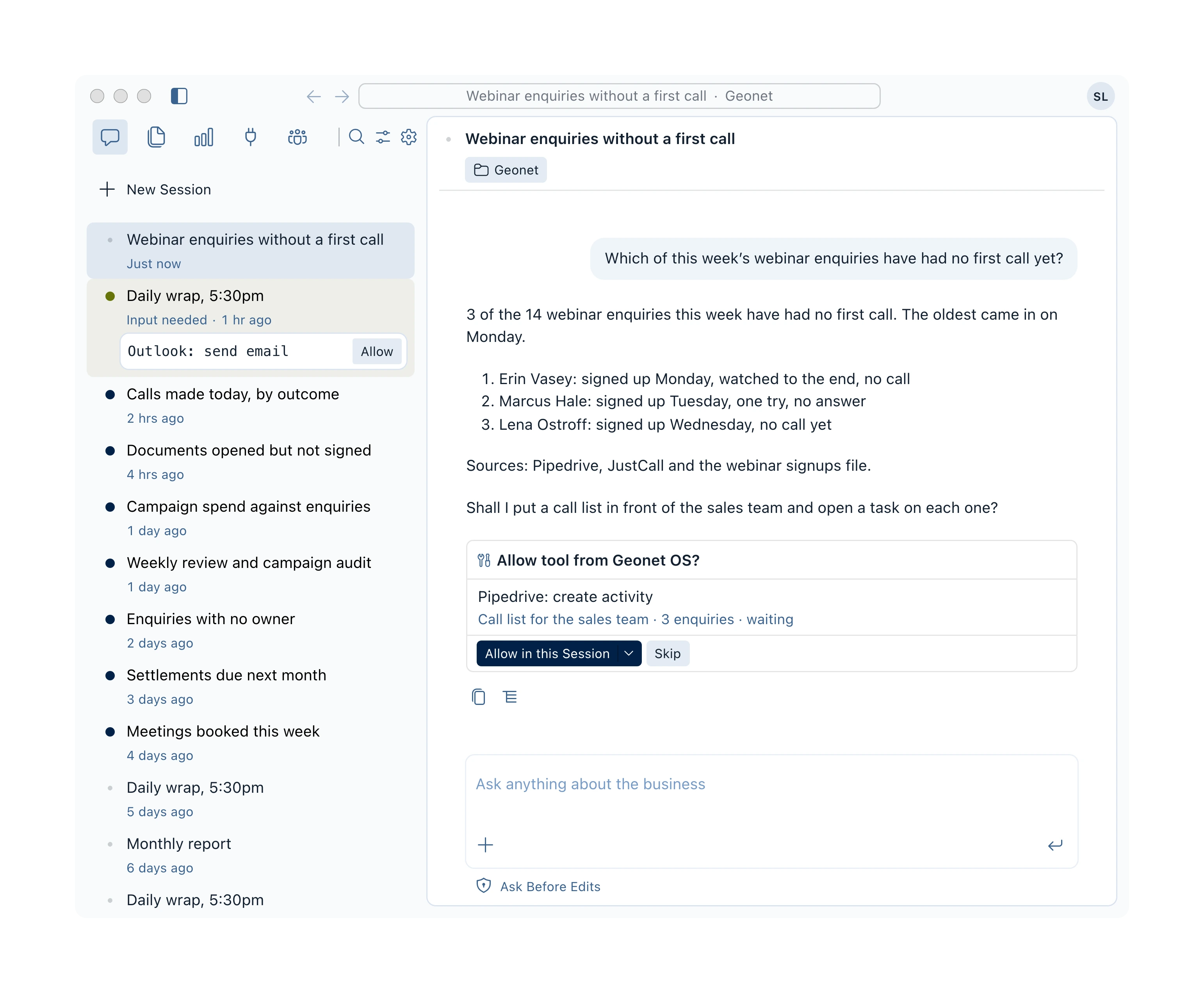
The sales team asks about a buyer, a call or this week’s enquiries, and gets an answer it can check.
1
Someone on the team asks, the way they’d ask a colleague.
2
It answers with the names and the numbers, in a few lines.
3
It shows where it came from: Pipedrive, JustCall and the webinar signups.
4
It drafts the next step, and a person approves it.
5
Geonet OS sits in the Dock, next to the tools the team already uses.
1
2
3
4
 Geonet OS
 Pipedrive
 Fathom
 Zoom
 PandaDoc
 Stripe
 LinkedIn
5
ALSO ON THE DESK
Outlook and Teams
Xero
Calendly

Meta
Google Analytics
Each number marks a step on the screen. Illustrative screen. Sample buyers and data, not Geonet’s own records.
Case study
×
Nothing goes out
without a person.
One question before a buyer meeting. Five systems read, one answer, and an email that waits.
WHAT IT READ
the deal and its stage
every call so far

the notes from that call
Outlook
tomorrow’s calendar
PandaDoc
the documents, opened and unsigned
WHAT WAITS FOR A PERSON
The follow-up email is drafted. It goes when someone on the team allows it.
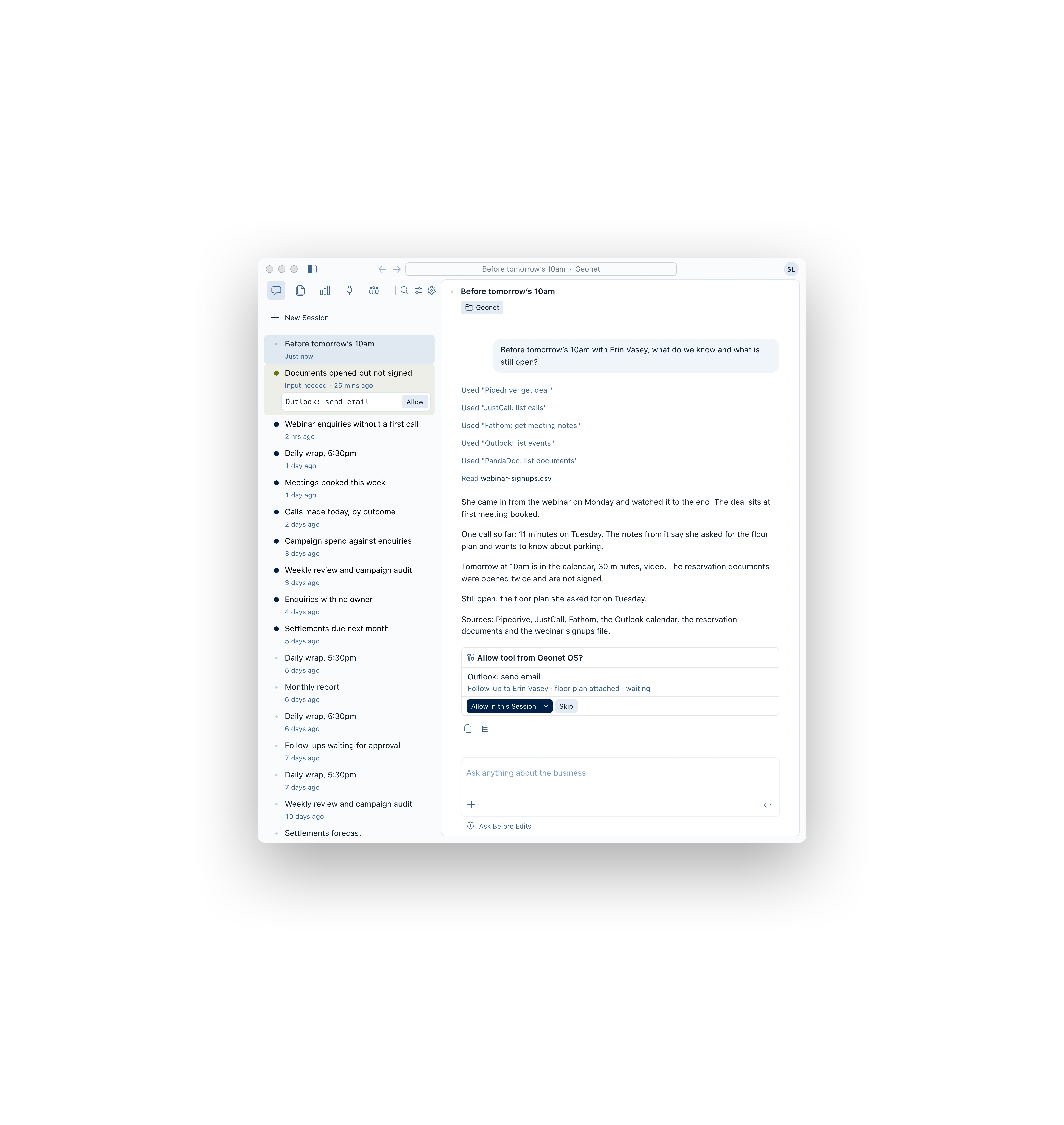
Illustrative screen in Geonet OS. A sample buyer and sample data, not a real record.
Case study
×
The salesperson walks in
already knowing the buyer.
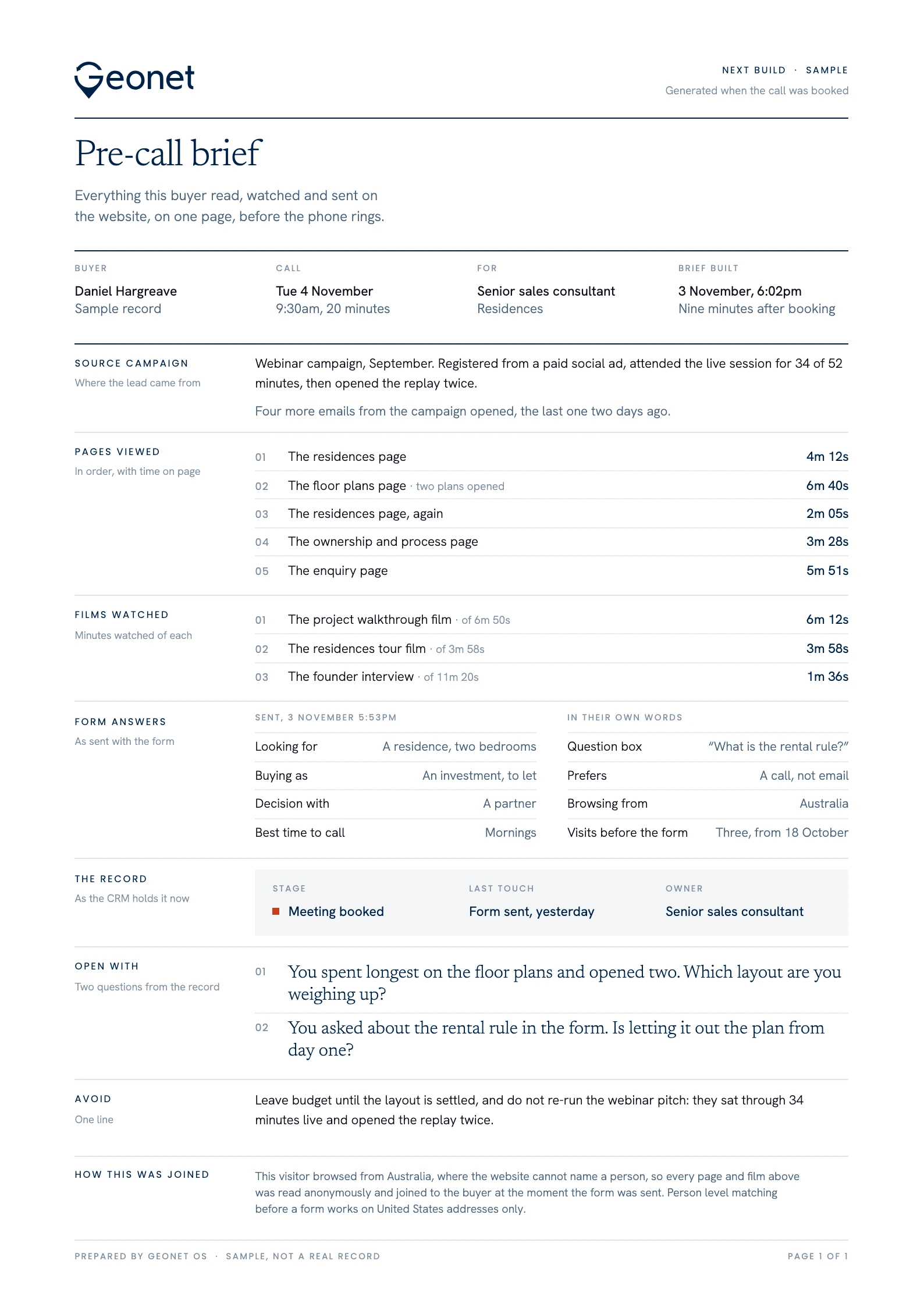
ON ONE PAGE
The campaign that brought them
Every page they viewed
Films watched, with minutes
Form answers, as sent
Their record in the CRM
Next build. A sample buyer, not a real record.
Case study
×
What’s next.
Dated from the files, and from the 20 October strategy session.
NOW
By 31 December
Website phase 2
Products, events, journal, company, legal and careers pages, with vacancies on a CMS.
PLANNED
Then
The backend migration
One database, one hosting project, then the handover to their own team.
OPEN
Recommended
Concierge calls before webinars
A person confirms attendance, so more registered buyers turn up.
Case study
×

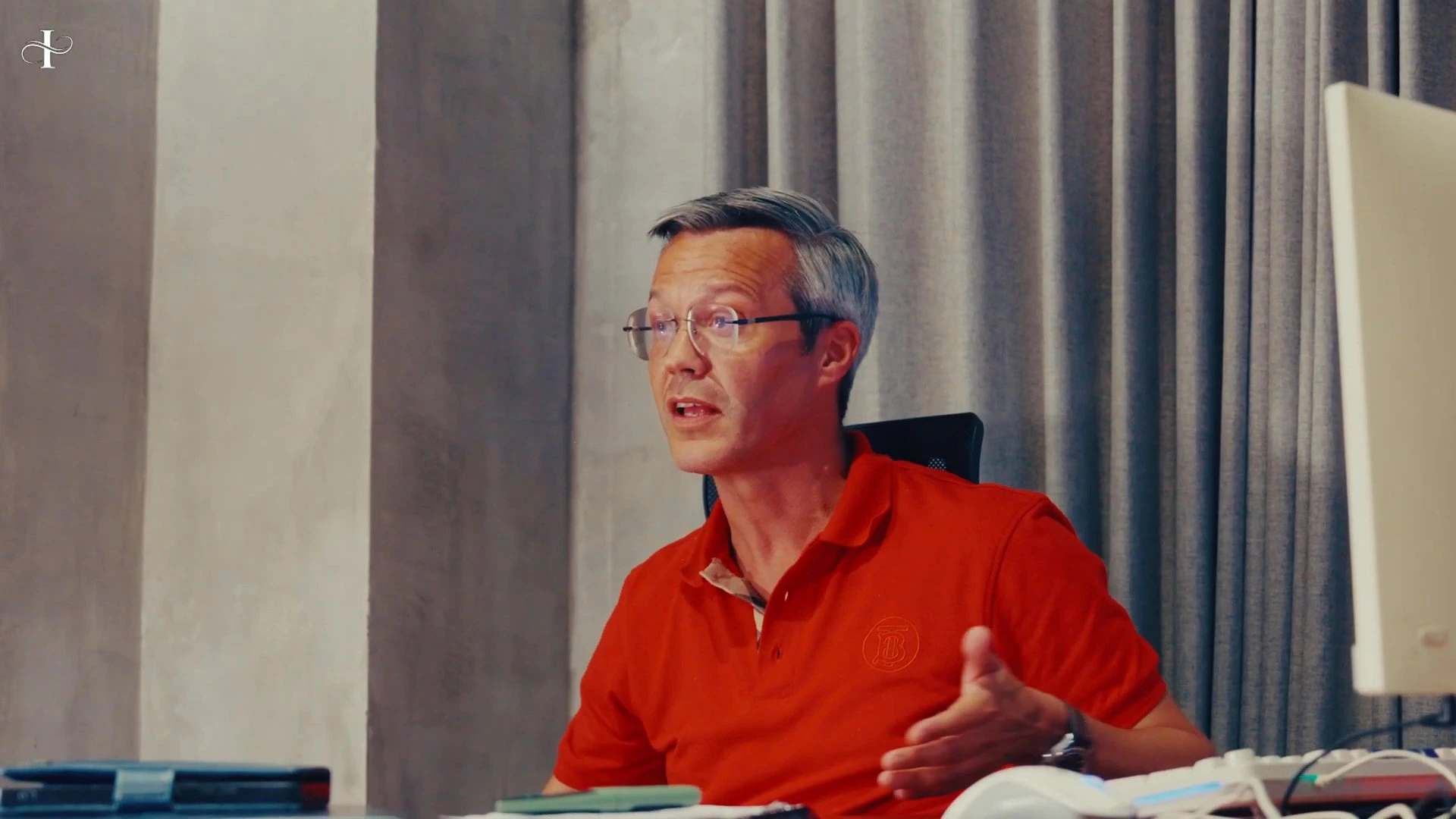
The target: double the workload per person.
Legal, accounting, tax, immigration and corporate administration under one roof. Sixty-plus people across three offices.
“Everybody today should be able to handle double the workload, double the number of clients, using that system. That is my goal.”
Alberto Furger, Founder, Trident Treehouse
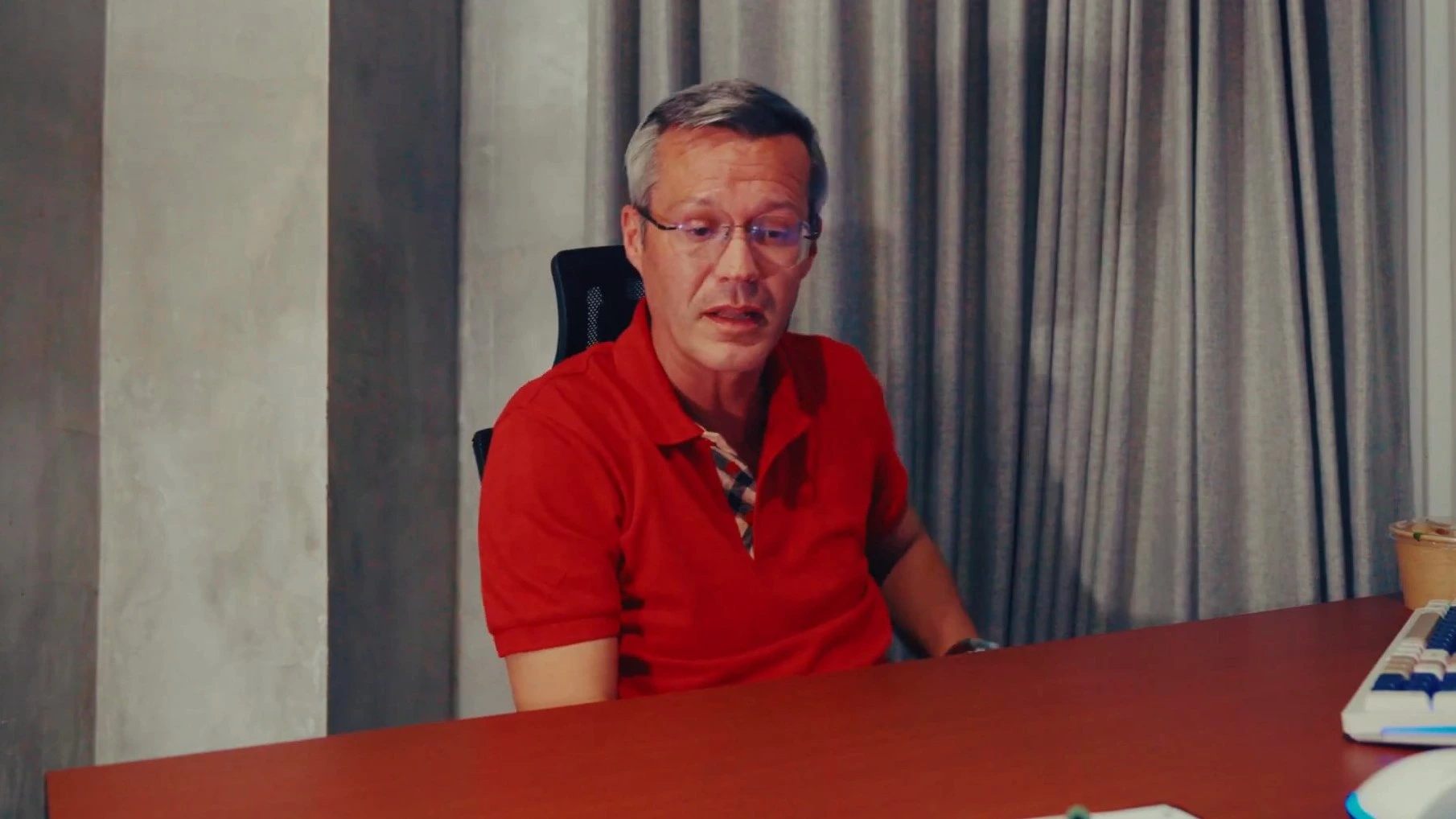
“I’d rather be ahead of the curve, learn my lesson early and pivot accordingly, than be too late.”
Hiring slowed on purpose while the operating system settles in.
Case study
×
Two more operators on the same system.
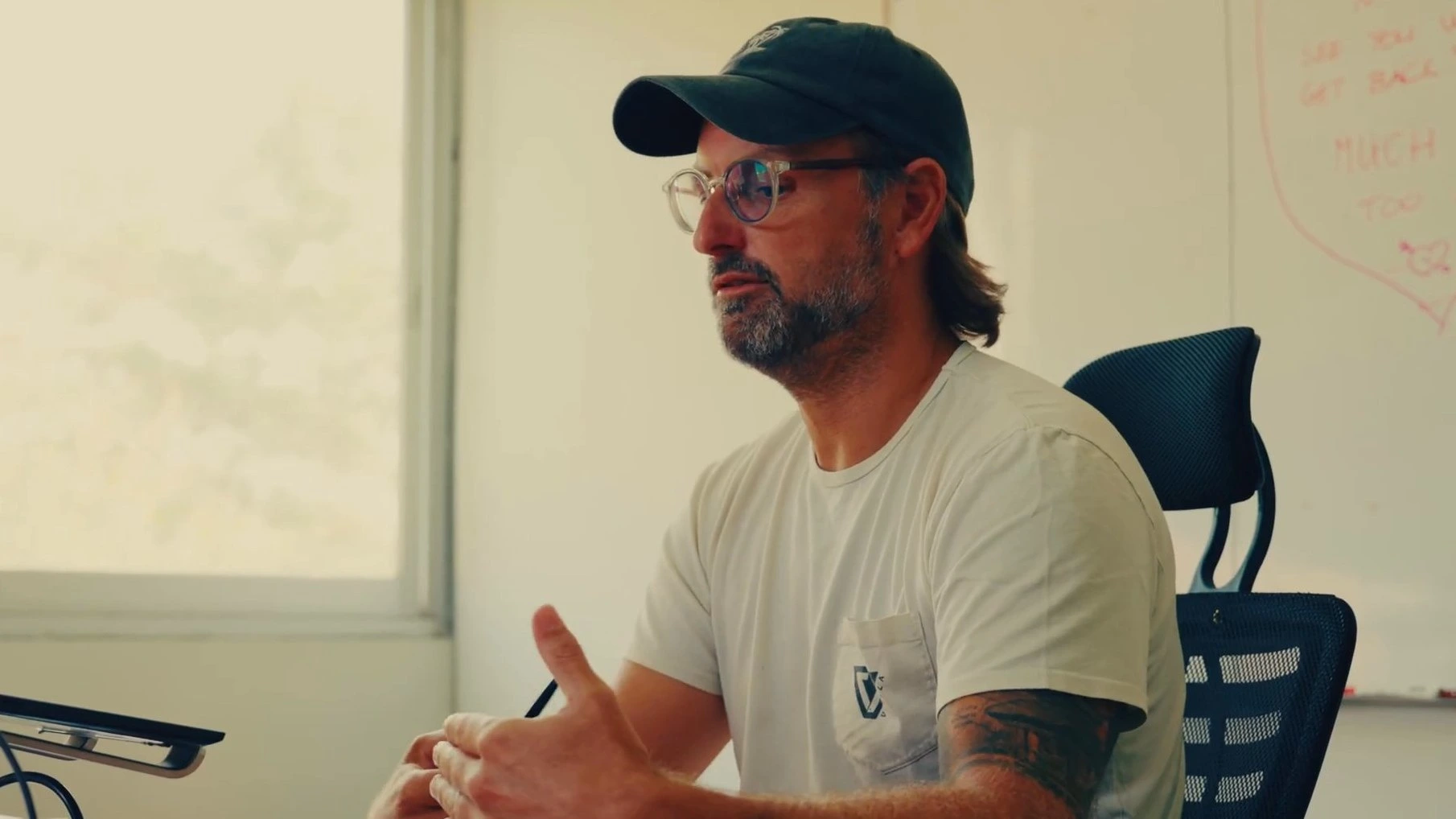

Property sales, management and daily rentals, run by four people in the office.
“Once the system is set up completely, 60% of time back, easily.”
Sean Johnson, Founder, BDL
Reports that took a staff member six hours take one.
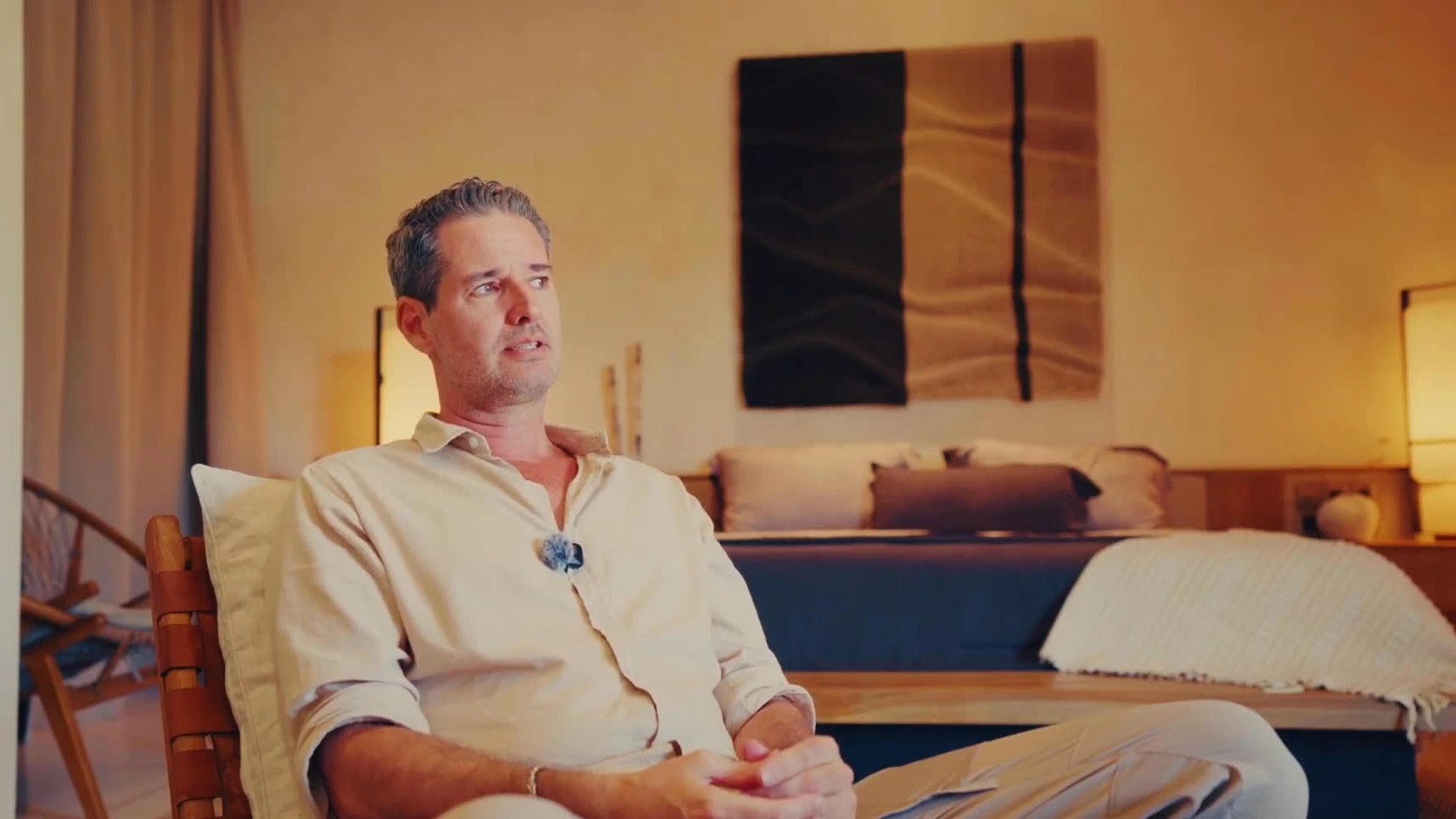

Seventeen properties and a residential community, run by their founder.
“I was thinking I might need six to eight people. Now I need one.”
Shanny Poijes, Founder, Core Concept Living
A sale contract that cost thousands in legal drafting is now a button.
Case study
×
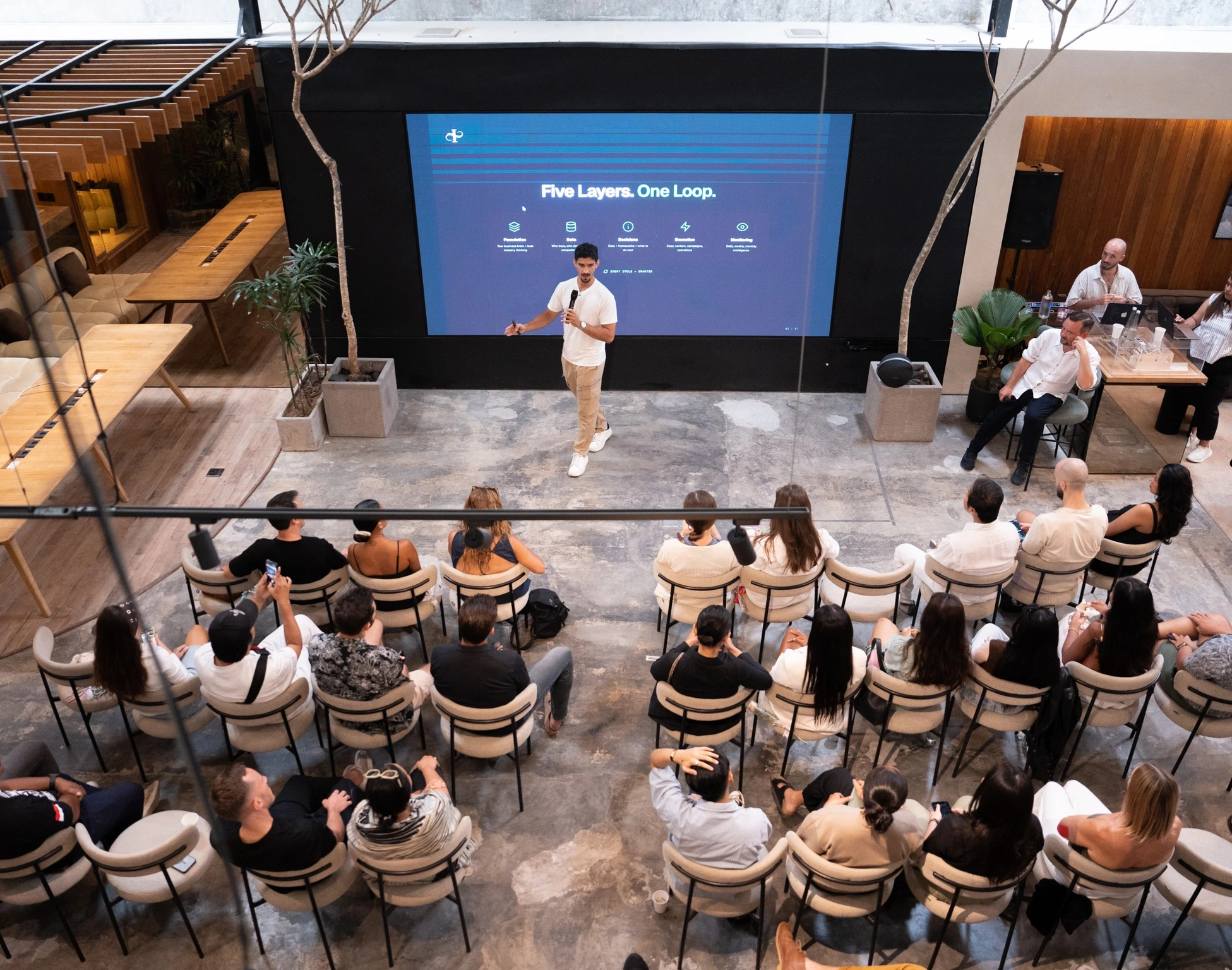
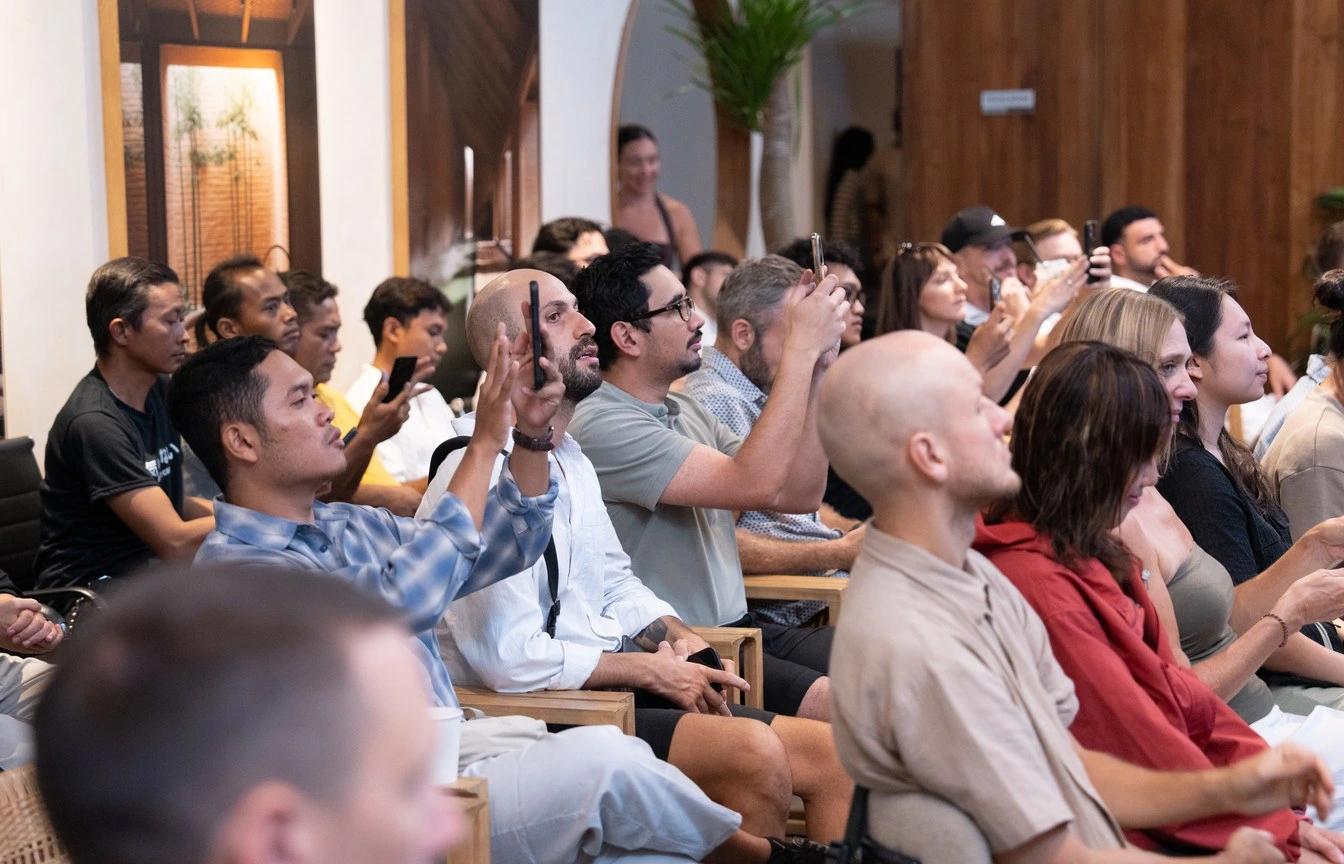
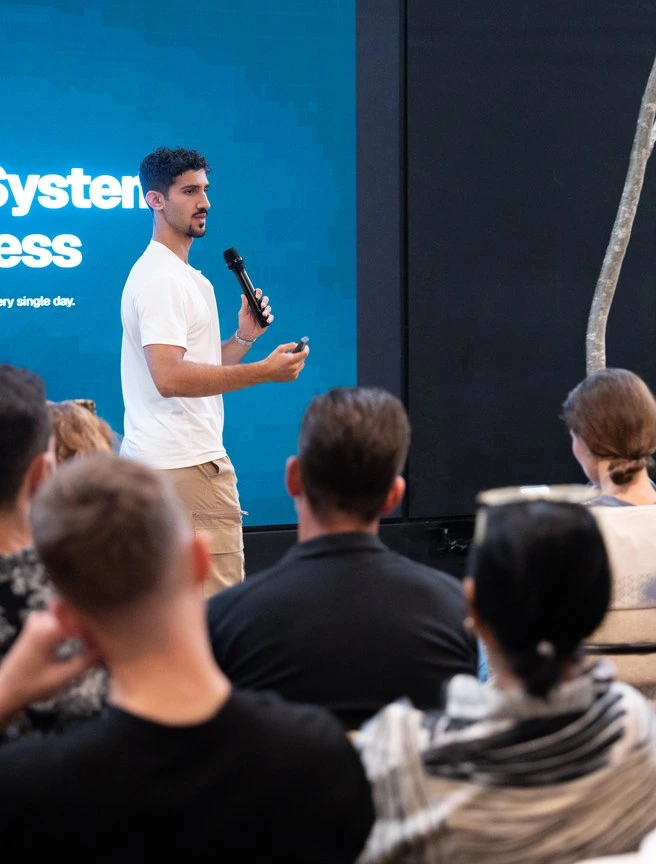

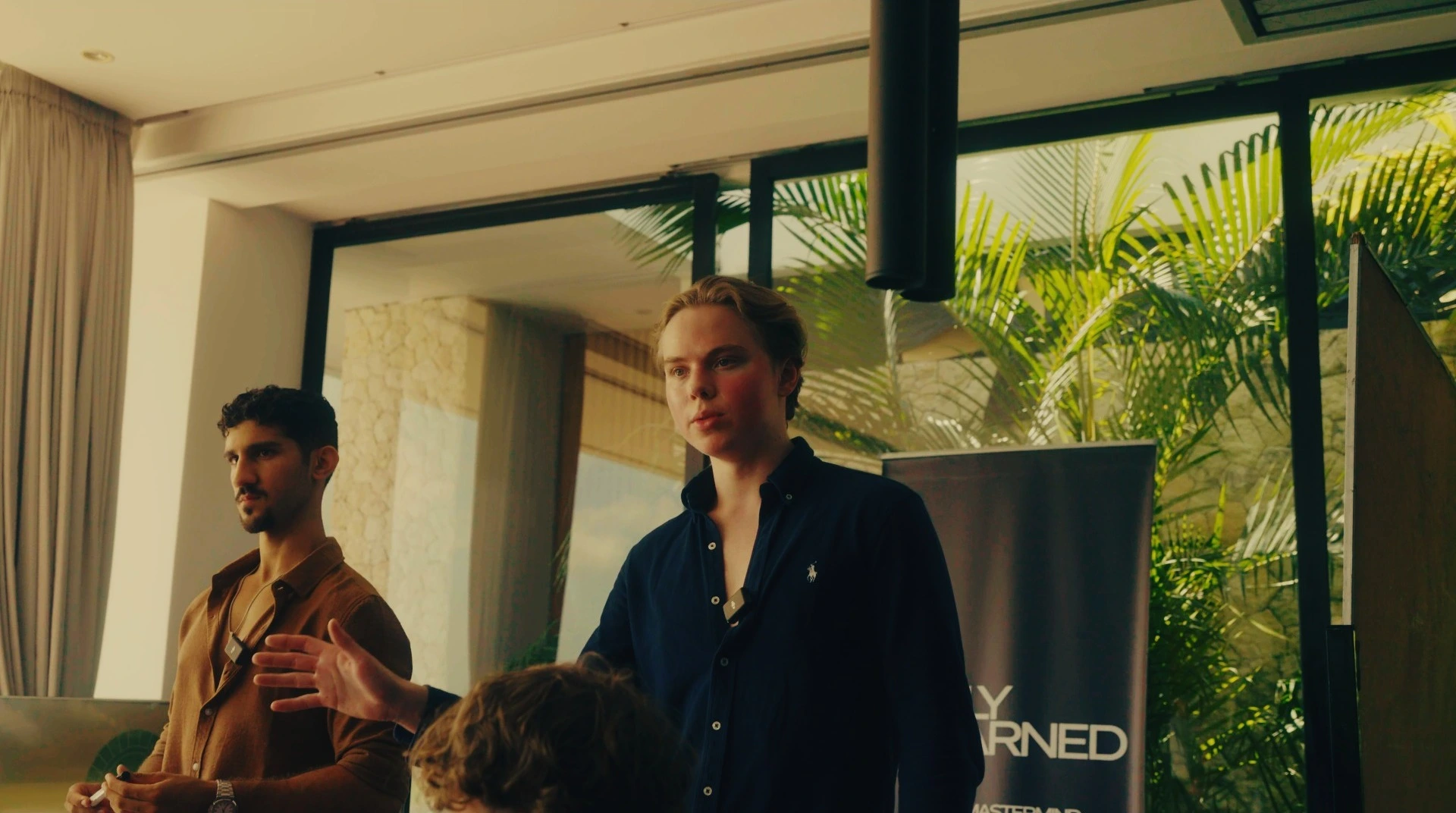
The OXO and Imperium events.
Case study
×
Who you’d work with.
Alex Kaymakanov
Chief Executive Officer
Leads company direction and product, drawing on software, data procurement and resource-planning experience. His focus is the architecture behind the operating system and the engineering standard required to make company knowledge useful in daily work.
Archie Nash
Chief Operating Officer
Leads operations, installation and customer success, drawing on the analysis of marketing, sales and operating performance. His focus is a clear business problem, useful measures and the internal ownership needed to make the operating system part of everyday work.
Product engineering and commercial operations meet in the same responsibility: understanding the company, building around its priorities and helping the team put the operating system to work.
The founders remain accountable for the quality of that relationship.
How we start.
Geonet’s own path: a call, a discovery session, then a first tranche with criteria agreed in writing.
01
A call with the people who run the business.
02
A discovery session on how the work runs today, and where it waits.
03
A first tranche with written criteria, demonstrated on screen.
Or reply to whoever sent you this link.
Imperium 2026 · Geonet case study